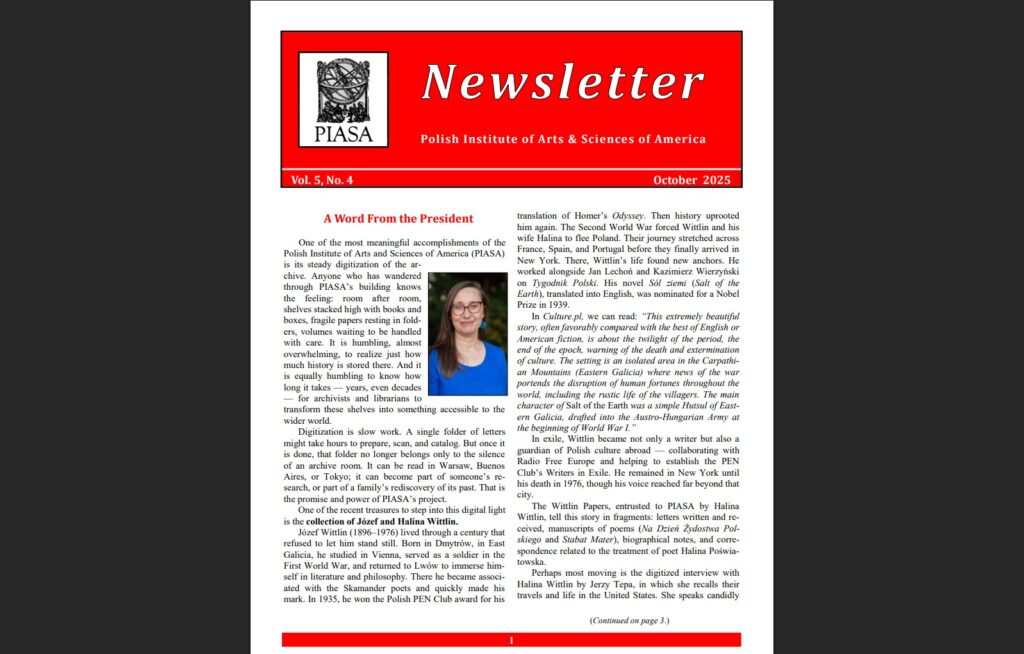
Newsletter Vol. 6, No. 2 April 2026
PIASA Latest News about us MEMBERSHIP CONFERENCES AWARDS PUBLICATIONS BLOG current events WEBINARS CONTACT Newsletter Vol. 6, No. 1 January 2026
Newsletter Vol. 6, No. 2 April 2026 Read More »
PIASA Latest News about us MEMBERSHIP CONFERENCES AWARDS PUBLICATIONS BLOG current events WEBINARS CONTACT Newsletter Vol. 6, No. 1 January 2026
Newsletter Vol. 6, No. 2 April 2026 Read More »
PIASA Latest News about us MEMBERSHIP CONFERENCES AWARDS PUBLICATIONS BLOG current events WEBINARS CONTACT Newsletter Vol. 6, No. 1 January 2026
Newsletter Vol. 6, No. 1 January 2026 Read More »
PIASA Latest News about us MEMBERSHIP CONFERENCES AWARDS PUBLICATIONS BLOG current events WEBINARS CONTACT Newsletter Vol. 4, No. 4 October 2024
Newsletter Vol. 5, No. 4 October 2025 Read More »
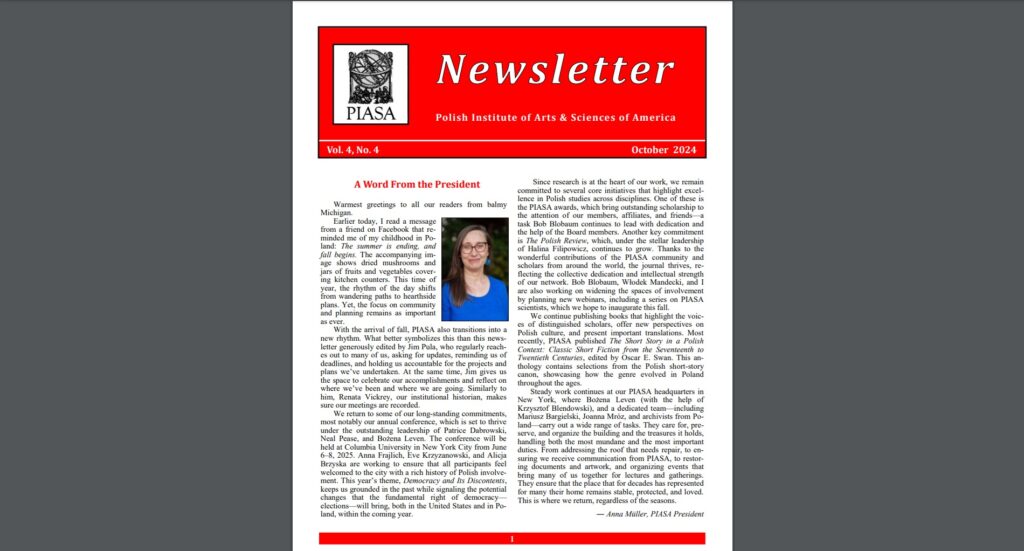
PIASA Latest News about us MEMBERSHIP CONFERENCES AWARDS PUBLICATIONS current events CONTACT Newsletter Vol. 4, No. 4 October 2024 A Word From the President A Word From the President Warmest greetings to all our readers from balmy Michigan. Earlier today, I read a message from a friend on Facebook that reminded me of my childhood in Poland: The summer is ending, and fall begins. The accompanying image shows dried mushrooms and jars of fruits and vegetables covering kitchen counters. This time of year, the rhythm of the day shifts from wandering paths to hearthside plans. Yet, the focus on community and planning remains as important as ever. With the arrival of fall, PIASA also transitions into a new rhythm. What better symbolizes this than this newsletter generously edited by Jim Pula, who regularly reaches out to many of us, asking for updates, reminding us of deadlines, and holding us accountable for the projects and plans we’ve undertaken. At the same time, Jim gives us the space to celebrate our accomplishments and reflect on where we’ve been and where we are going. Similarly to him, Renata Vickrey, our institutional historian, makes sure our meetings are recorded. We return to some of our long-standing commitments, most notably our annual conference, which is set to thrive under the outstanding leadership of Patrice Dabrowski, Neal Pease, and Bożena Leven. The conference will be held at Columbia University in New York City from June 6–8, 2025. Anna Frajlich, Eve Krzyzanowski, and Alicja Brzyska are working to ensure that all participants feel welcomed to the city with a rich history of Polish involvement. This year’s theme, Democracy and Its Discontents, keeps us grounded in the past while signaling the potential changes that the fundamental right of democracy— elections—will bring, both in the United States and in Poland, within the coming year. Since research is at the heart of our work, we remain committed to several core initiatives that highlight excellence in Polish studies across disciplines. One of these is the PIASA awards, which bring outstanding scholarship to the attention of our members, affiliates, and friends—a task Bob Blobaum continues to lead with dedication and the help of the Board members. Another key commitment is The Polish Review, which, under the stellar leadership of Halina Filipowicz, continues to grow. Thanks to the wonderful contributions of the PIASA community and scholars from around the world, the journal thrives, reflecting the collective dedication and intellectual strength of our network. Bob Blobaum, Włodek Mandecki, and I are also working on widening the spaces of involvement by planning new webinars, including a series on PIASA scientists, which we hope to inaugurate this fall. We continue publishing books that highlight the voices of distinguished scholars, offer new perspectives on Polish culture, and present important translations. Most recently, PIASA published The Short Story in a Polish Context: Classic Short Fiction from the Seventeenth to Twentieth Centuries, edited by Oscar E. Swan. This anthology contains selections from the Polish short-story canon, showcasing how the genre evolved in Poland throughout the ages. Steady work continues at our PIASA headquarters in New York, where Bożena Leven (with the help of Krzysztof Blendowski), and a dedicated team—including Mariusz Bargielski, Joanna Mróz, and archivists from Poland—carry out a wide range of tasks. They care for, preserve, and organize the building and the treasures it holds, handling both the most mundane and the most important duties. From addressing the roof that needs repair, to ensuring we receive communication from PIASA, to restoring documents and artwork, and organizing events that bring many of us together for lectures and gatherings. They ensure that the place that for decades has represented for many their home remains stable, protected, and loved. This is where we return, regardless of the seasons. ― Anna Müller, PIASA President
Newsletter Vol. 4, No. 4 October 2024 Read More »
PIASA Latest News about us MEMBERSHIP CONFERENCES AWARDS PUBLICATIONS current events CONTACT Newsletter Vol. 4, No. 3 July 2024 A Word From the President A Word From the President The 9th Polish Institute of Arts and Sciences of America’s World Congress has just concluded. This time we met at the Collegium Civitas in the Palace of Cul- ture in Warsaw under the patronage of the Minister of Science and Higher Education and with the presence of many important guests, including War- saw Mayor Rafał Trzaskowski. On Saturday, June 8, Robert Kostro host- ed our banquet at the Polish History Museum. With 54 panels and over 180 participants from 17 countries, the Congress was another testament to the dedication and hard work of all board members, especially outgoing PIASA president Robert Blobaum, executive director Bożena Leven, and program conference coordinator Patrice Dabrowski. Let me then begin by saying a big thank you to all who participated in the Congress, but especially to Robert Blobaum, whose second term as PIASA’s president has just ended. Bob, under your unwavering leadership, PIASA organized one of its most successful Congresses. Thank you! I am tremendously honored to be the next president of PIASA. I am grateful for the trust of the PIASA Board and for Bob’s guidance over the last year, which has helped me to prepare for this new role. Bob’s leadership over the last six years has transformed PIASA into a robust organi- zation with growing recognition worldwide. I am stepping into big shoes. Growing up in Communist Poland, I could have never imagined that this honor—the opportunity to head a major Polish/Polish American organization—would be part of my experience as well. I was born and raised in Gdańsk, Poland. For the past 20 years, I have lived in the United States, moving from Indiana, through Florida, to Michi- 1 Polish Institute of Arts & Sciences of America Vol. 4, No. 3 July 2024 gan. I completed my Ph.D. dissertation in Eastern Europe- an history at Indiana University. In 2007, I moved back to Gdańsk, where I had the chance to work at the Second World War Museum. In 2011, I returned to the United States, first to work at the University of Florida in Gaines- ville, and then at the University of Michigan-Dearborn, where I am Frank and Mary Padzieski Endowed Professor in Polish/Polish American/Eastern European Studies. Be- fore becoming involved with PIASA, I served as the president of the Polish American Historical Association (PAHA) from 2018-2020. I am the author of If the Walls Could Speak: Inside a Women’s Prison in Communist Poland (Oxford University Press, 2018) and An Ordinary Life? The Journeys of Tonia Lechtman, 1918-1996 (Ohio University Press, 2022). Despite being firmly entrenched in American academia and my local De- troit community, I have always kept one foot in Poland, returning there on grants, participating in various projects and con- ferences, and publishing in Polish. I be- lieve not only in the importance of main- taining these contacts but also in building bridges for col- leagues and students from both continents to meet, share, and grow together. And I firmly believe that PIASA is be- coming one of the most important spaces for collaboration and recognition of people whose work is connected with Poland and/or American Polonia. PIASA stands strong: It includes participants from many countries, continues attracting new people (including junior scholars from both Poland and the United States), contributes to academic discussions by organizing confer- ences and running The Polish Review. It is an important platform for recognizing the work of Polish scientists and scholars. It is inclusive, open, and forward-looking. As the incoming president, I am eager to continue building on this strong foundation. ― Anna Müller, PIASA President
Newsletter Vol. 4, No. 3 July 2024 Read More »
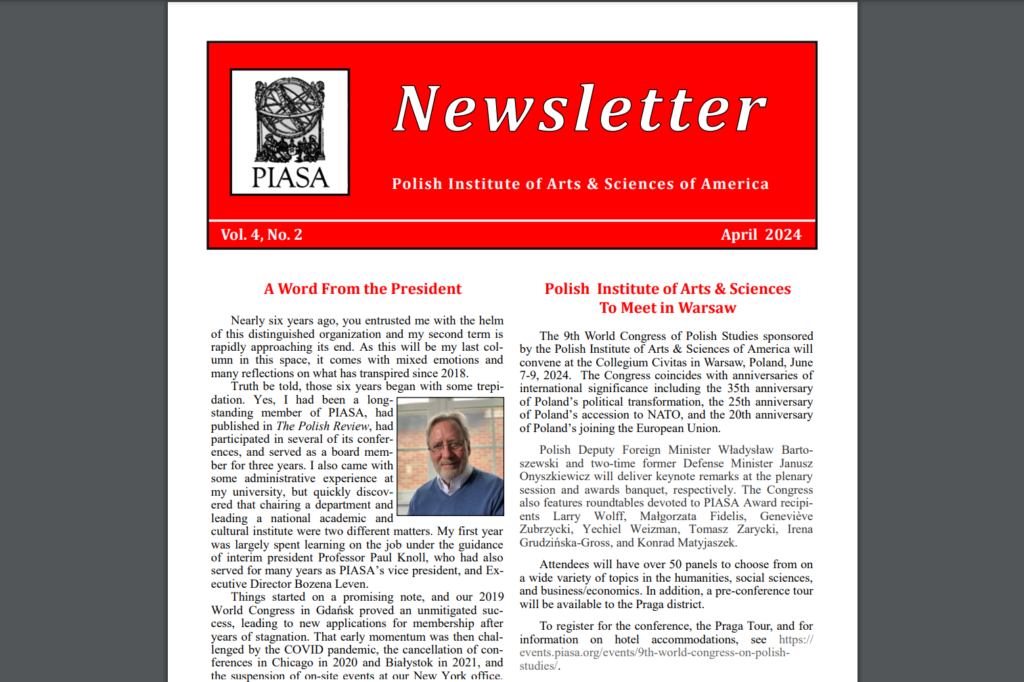
PIASA Latest News about us MEMBERSHIP CONFERENCES AWARDS PUBLICATIONS current events CONTACT Newsletter Vol. 4, No. 2 April 2024 Nearly six years ago, you entrusted me with the helm of this distinguished organization and my second term is rapidly approaching its end. As this will be my last column in this space, it comes with mixed emotions and many reflections on what has transpired since 2018. Truth be told, those six years began with some trepidation. Yes, I had been a longstanding member of PIASA, had published in The Polish Review, had participated in several of its conferences, and served as a board member for three years. I also came with some administrative experience at my university, but quickly discovered that chairing a department and leading a national academic and cultural institute were two different matters. My first year was largely spent learning on the job under the guidance of interim president Professor Paul Knoll, who had also served for many years as PIASA’s vice president, and Executive Director Bozena Leven. Things started on a promising note, and our 2019 World Congress in Gdańsk proved an unmitigated success, leading to new applications for membership after years of stagnation. That early momentum was then challenged by the COVID pandemic, the cancellation of conferences in Chicago in 2020 and Białystok in 2021, and the suspension of on-site events at our New York office. We had to find new means to stay connected to our membership and for our members to remain connected with each other. One was this Newsletter, the brainchild of Prof. James Pula. The other was a series of webinars, organized with the help of Prof. Anna Müller, PIASA’s incoming president. We also made good use of our assets to emerge from the pandemic a stronger and more diverse organization. The Polish Review, edited early on by Prof. Neal Pease and then by Prof. Halina Filipowicz, has been transformed into the leading English-language multidisciplinary Polish studies journal with a genuinely global reach and a destination for cutting-edge scholarship. Our awards, which back in 2018 were irregularly given, are now well funded, increasingly competitive, and have increased from the original five to nine. Consequently, the increase in membership we experienced before the pandemic has accelerated over the last three years. Finally, we have renewed our annual meetings, first in Białystok in 2022, just months after Russia’s invasion of Ukraine, and in New Britain in 2023. In both instances, as well as for the forthcoming World Congress in Warsaw, the amazing organizational talents of Patrice Dabrowski have proved invaluable. Every indication is that the Warsaw Congress will rival that of Gdańsk, both in terms of numbers and in the quality of speakers and panels. In July, you will “Meet the New President” in this space, and I trust that you will support Anna Müller in her challenging new role. PIASA’s future is a bright one, and while I will be stepping aside as president, I hope to remain on the Board of Directors to assist in the transition, just as I was assisted back in 2018. I leave you with just two words of appreciation: “Thank you!” ― Robert Blobaum, PIASA President
Newsletter Vol. 4, No. 2 April 2024 Read More »
PIASA Latest News about us MEMBERSHIP CONFERENCES AWARDS PUBLICATIONS current events CONTACT Newsletter Vol. 4, No. 1 January 2024 As I write this column, Hanukkah has come and gone, and Christmas will soon be upon us. Ringing out the old year and bringing in the new is for many of us a time of reflection and renewal. As president of PIASA, I take great joy in celebrating the achievements of scholars, artists, scientists and others whose outstanding work falls within our ambit of “Polish Studies,” broadly defined. PIASA award season is upon us, committee recommendations are coming in, and in just a few weeks award recipients will be officially announced. Allow me to take a moment to thank the members of our award committees, many of which include previous recipients, and especially members of the Board of Directors who sit on this year’s committees and often serve as their connecting tissue: Michael Bernhard, Anna Müller, Neal Pease, Nathan Wood, Piotr Wróbel, and Geneviève Zubrzycki. Many of our new award recipients will be honored at our forthcoming 9th World Congress of Polish Studies in Warsaw, hosted by our partnering institution Collegium Civitas in the city’s iconic Palace of Culture and Science from June 6-9. The turn of the year also means that preliminary planning for the Congress will be shifting into higher gear, as panel and paper proposal come in before the February 1 deadline, keynote speakers are lined up, and grant funding to support our meeting is confirmed. We have already announced that Dr. Janusz Onyszkiewicz, Solidarity spokesperson in the 1980s and two-time former Defense Minister, has agreed to serve as the banquet speaker, which is just the start of the exciting news we expect to share with you in the coming months. Organizing such a major conference is a collective effort involving several dedicated individuals whom I also wish to acknowledge: Katarzyna Maniszewska and Agnieszka Mrowińska from Collegium Civitas, and PIASA Board Members Patrice Dabrowski, Bożena Leven, Anna Müller and Neal Pease. The general theme of the 9th Congress is “Poland in the World.” Bringing PIASA to the world and the world to PIASA are those responsible for our media and publications: Mariusz Bargielski, in charge of our email communications from New York; Kathleen Cioffi, editor of PIASA Books; Halina Filipowicz, editor-in-chief of The Polish Review; James Pula, editor of this Newsletter; and Dominic Wolacewlcz, manager of our website. PIASA’s increased visibility resulting from their efforts continues to attract new members: 23 have joined our ranks in 2023, a coincidental but most gratifying number. In conclusion, as war continues to rage in Ukraine, Gaza, and elsewhere in the world, we bring one last simple, hopeful, and familiar holiday message, that of peace on earth and good will to all.
Newsletter Vol. 4, No. 1 January 2024 Read More »
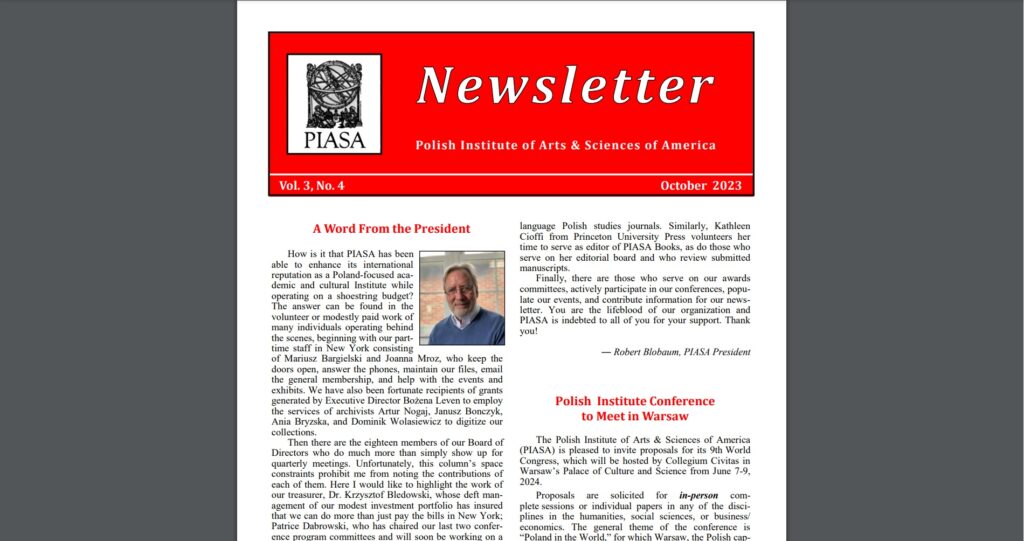
PIASA Latest News about us MEMBERSHIP CONFERENCES AWARDS PUBLICATIONS current events CONTACT Newsletter Vol. 3, No. 4 October 2023 How is it that PIASA has been able to enhance its international reputation as a Poland-focused academic and cultural Institute while operating on a shoestring budget? The answer can be found in the volunteer or modestly paid work of many individuals operating behind the scenes, beginning with our part-time staff in New York consisting of Mariusz Bargielski and Joanna Mroz, who keep the doors open, answer the phones, maintain our files, email the general membership, and help with the events and exhibits. We have also been fortunate recipients of grants generated by Executive Director Bożena Leven to employ the services of archivists Artur Nogaj, Janusz Bonczkowski, Ania Brzyska, and Doninik Wolasiewiz to digitize our collections. Then there are the eighteen members of our Board of Directors who do much more than simply show up for quarterly meetings. Unfortunately, this column’s space constraints prohibit me from noting the contributions of each of them. Here I would like to highlight the work of our treasurer, Dr. Krzysztof Bledowski, whose deft man-agement of our modest investment portfolio has insured that we can do more than just pay the bills in New York; Patrice Dabrowski, who has chaired our last two conference program committees and will soon be working on a third; and Anna Müller, who will be moderating a PIASA webinar devoted to a discussion of migration and human rights in Poland and the US on October 28. This newsletter is the creation of James Pula, who has compiled and edited each issue since its existence. At The Polish Review, Editor-in-Chief Halina Filipowicz has what is essentially a full-time job. She is supported by the journal’s book review editors, associate editors, special issue editors, reviewers of submissions, and an editorial board who have helped place TPR at the top of English-language Polish studies journals. Similarly, Kathleen Cioffi from Princeton University Press volunteers her time to serve as editor of PIASA Books, as do those who serve on her editorial board and who review submitted manuscripts. Finally, there are those who serve on our awards committees, actively participate in our conferences, populate our events, and contribute information for our newsletter. You are the lifeblood of our organization and PIASA is indebted to all of you for your support. Thank you! ― Robert Blobaum, PIASA President
Newsletter Vol. 3, No. 4 October 2023 Read More »
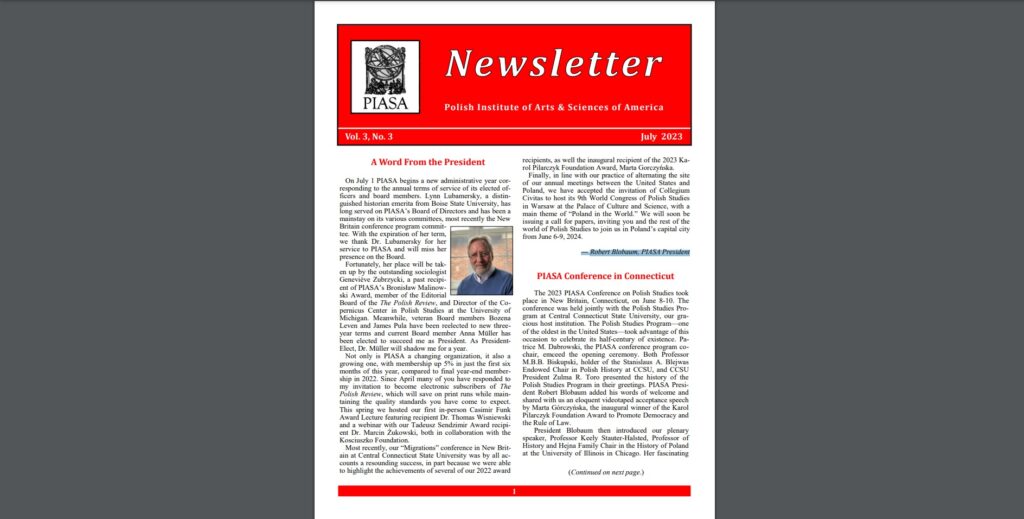
PIASA Latest News about us MEMBERSHIP CONFERENCES AWARDS PUBLICATIONS CONTACT Newsletter Vol. 3, No. 3 July 2023 On July 1 PIASA begins a new administrative year corresponding to the annual terms of service of its elected officers and board members. Lynn Lubamersky, a distinguished historian emerita from Boise State University, has long served on PIASA’s Board of Directors and has been a mainstay on its various committees, most recently the New Britain conference program committee. With the expiration of her term, we thank Dr. Lubamersky for her service to PIASA and will miss her presence on the Board. Fortunately, her place will be taken up by the outstanding sociologist Geneviève Zubrzycki, a past recipient of PIASA’s Bronisław Malinowski Award, member of the Editorial Board of the The Polish Review, and Director of the Copernicus Center in Polish Studies at the University of Michigan. Meanwhile, veteran Board members Bozena Leven and James Pula have been reelected to new threeyear terms and current Board member Anna Müller has been elected to succeed me as President. As PresidentElect, Dr. Müller will shadow me for a year. Not only is PIASA a changing organization, it also a growing one, with membership up 5% in just the first six months of this year, compared to final year-end membership in 2022. Since April many of you have responded to my invitation to become electronic subscribers of The Polish Review, which will save on print runs while maintaining the quality standards you have come to expect. This spring we hosted our first in-person Casimir Funk Award Lecture featuring recipient Dr. Thomas Wisniewski and a webinar with our Tadeusz Sendzimir Award recipient Dr. Marcin Żukowski, both in collaboration with the Kosciuszko Foundation. Most recently, our “Migrations” conference in New Britain at Central Connecticut State University was by all accounts a resounding success, in part because we were able to highlight the achievements of several of our 2022 award recipients, as well the inaugural recipient of the 2023 Karol Pilarczyk Foundation Award, Marta Gorczyńska. Finally, in line with our practice of alternating the site of our annual meetings between the United States and Poland, we have accepted the invitation of Collegium Civitas to host its 9th World Congress of Polish Studies in Warsaw at the Palace of Culture and Science, with a main theme of “Poland in the World.” We will soon be issuing a call for papers, inviting you and the rest of the world of Polish Studies to join us in Poland’s capital city from June 6-9, 2024. ― Robert Blobaum, PIASA President
Newsletter Vol. 3, No. 3 July 2023 Read More »
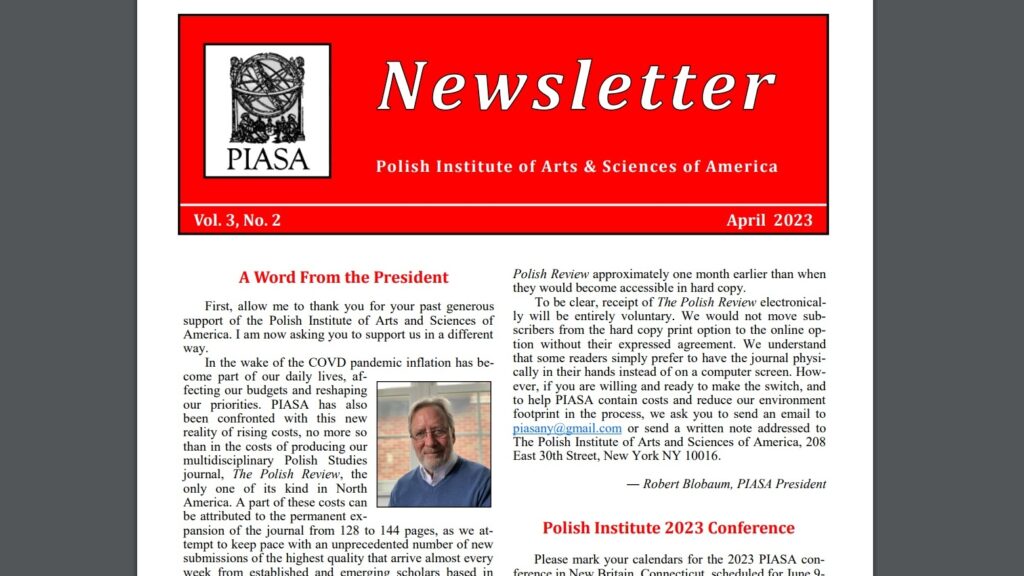
PIASA Latest News about us MEMBERSHIP CONFERENCES AWARDS PUBLICATIONS CONTACT Newsletter Vol. 3, No. 2 April 2023 First, allow me to thank you for your past generous support of the Polish Institute of Arts and Sciences of America. I am now asking you to support us in a different way. In the wake of the COVD pandemic inflation has become part of our daily lives, affecting our budgets and reshaping our priorities. PIASA has also been confronted with this new reality of rising costs, no more so than in the costs of producing our multidisciplinary Polish Studies journal, The Polish Review, the only one of its kind in North America. A part of these costs can be attributed to the permanent expansion of the journal from 128 to 144 pages, as we attempt to keep pace with an unprecedented number of new submissions of the highest quality that arrive almost every week from established and emerging scholars based in many different countries. A greater contributor, however, is in the rapidly rising costs faced by academic journal publishing more generally. In other words, The Polish Review is hardly alone in this regard. Other journals have tried to meet these challenges in various ways, among them by substantially raising membership rates to pass on the costs to journal subscribers, and by making online subscriptions the default option or even the only option to save on mailing costs. PIASA, for its part, views such measures as a last resort in providing The Polish Review to its members. What we propose instead is to maintain print copies as the default option for member subscribers while appealing to those members who would be willing, or may even prefer, to receive The Polish Review online. One major advantage of an online subscription is that you will be able to read the kind of excellent articles, review essays, and book reviews which have come to define The Polish Review approximately one month earlier than when they would become accessible in hard copy. To be clear, receipt of The Polish Review electronically will be entirely voluntary. We would not move subscribers from the hard copy print option to the online option without their expressed agreement. We understand that some readers simply prefer to have the journal physically in their hands instead of on a computer screen. However, if you are willing and ready to make the switch, and to help PIASA contain costs and reduce our environment footprint in the process, we ask you to send an email to piasany@gmail.com or send a written note addressed to The Polish Institute of Arts and Sciences of America, 208 East 30th Street, New York NY 10016. ― Robert Blobaum, PIASA President
Newsletter Vol. 3, No. 2 April 2023 Read More »