PIASA Books
Discover our expanding catalog of scholarly works exploring the history, culture, and society of Poland. We invite authors and researchers to submit their book proposals and join our mission of advancing the humanities.
Publish with
PIASA Books
PIASA Books, the publishing division of the Polish Institute of Arts and Sciences of America, invites book proposals in all fields of the social sciences, history, and the humanities, with a focus on topics related to Poland and the Polish diaspora.
Our catalog to date includes scholarly monographs, anthologies, and translated collections—all exemplifying PIASA’s mission to support and share cutting-edge research in the humanities and social sciences.
The first books published by PIASA Books were edited by Charles S. Kraszewski, a Polish-American author and translator of Polish, Czech, Slovak, Greek, and Latin. Subsequent volumes were edited by Kathleen Cioffi, an author and book editor at Princeton University Press, as well as a theatre historian and drama critic who writes frequently about Polish theatre.
We welcome proposals for scholarly monographs, essay collections, and edited volumes that contribute to the growing field of Polish studies. Proposals should be no more than 10 single-spaced pages and must include a table of contents and the author’s C.V. or resume. In addition to a project description, proposals should outline the projected length of the manuscript, plans for illustrations (if any), and the intended audience. Promising submissions are reviewed by our editorial board—Tamara Trojanowska, Nathan Wood, and Marek Kaminski—who determine whether to invite a full manuscript.
New Release
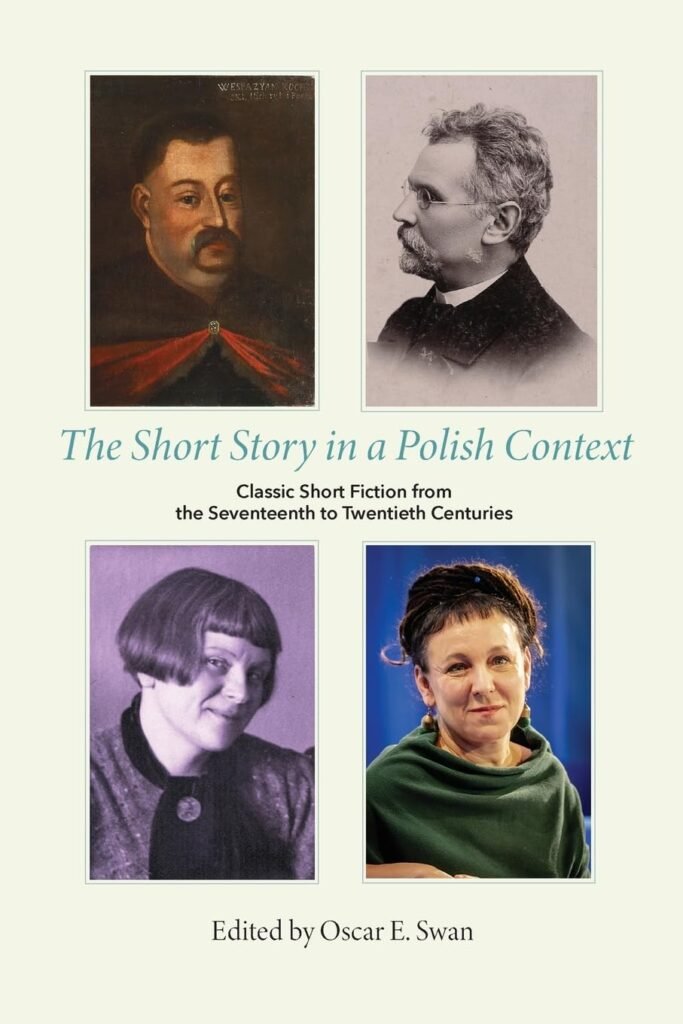
The Short Story in a Polish Context:Classic Short Fiction from the Seventeenth to Twentieth Centuries
Edited and with Commentary by Oscar E. Swan
Essential Reading for Polish Studies
An anthology that shows how the short-fiction genre evolved in Poland, The Short Story in a Polish Context contains selections belonging to the Polish short-story canon throughout the ages. A variety of Poland’s greatest and best-known authors and interesting themes have been chosen. Several of the stories appear here in English for the first time in Oscar Swan’s masterful translations; others have been translated by other well-known literary translators of Polish. Prof. Swan’s commentaries on the stories give the reader historical context as well as providing insight into linguistic and cultural aspects that might otherwise elude the non-Polish-speaking reader. Appropriate for use as a text in a Polish literature-in-translation course, the book can also serve as a supplementary text for courses on Central European culture or simply as an introduction to Polish culture for the general reader.
About the Editor
Oscar E. Swan is professor of Slavic languages and literature at the University of Pittsburgh, where he has been teaching since 1974. He specializes in Polish language, literature, and culture as well as Polish cinema. He is the author of many textbooks and reference books for Polish-language learners, several translations from Polish, and scholarly monographs and articles about Slavic languages and literatures.
The Short Story in a Polish Context, edited and with Commentary by Oscar E. Swan. Published by PIASA Books, an imprint of the Polish Institute of Arts and Sciences of America.
ISBN 978-0-940962-17-0
List price $29.95
“The selection of the short stories is wide-ranging historically and thematically. In this way, The Short Story in a Polish Context presents a personal, yet fairly exhaustive, account of the Polish short-story tradition through the centuries.”
Agnieszka Jezyk
University of Washington
“The editor has my congratulations for making an important element of Polish cultural production—the short tale and its various sub-genres—accessible to students of Polish literature and language and to general readers.”
George Gasyna,
University of Illinois at Urbana-Champaign
Current Releases
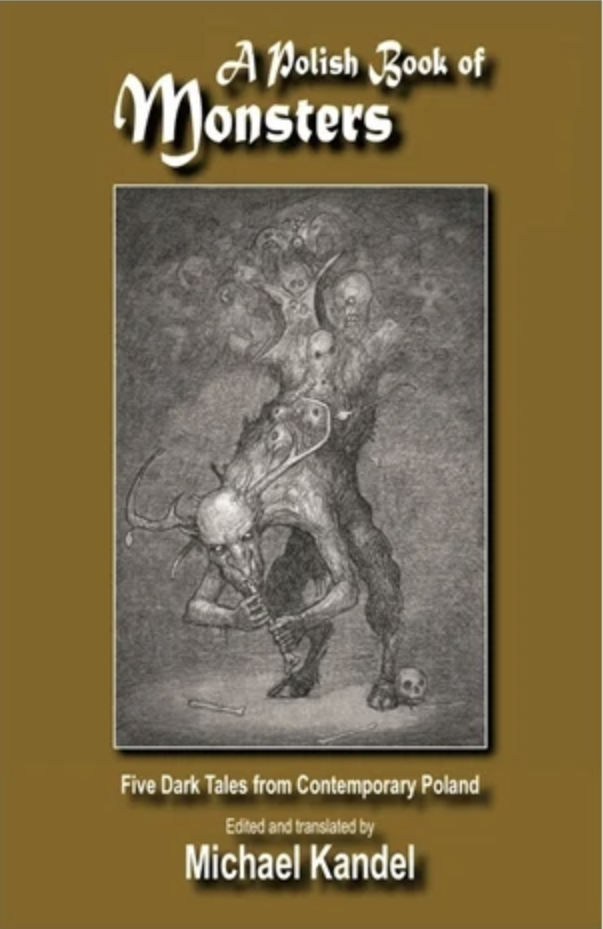
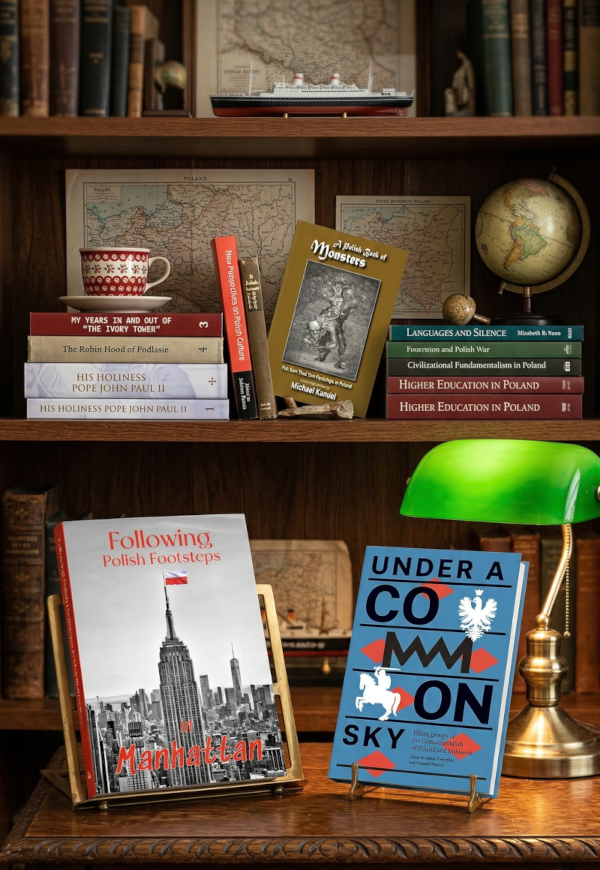
A Polish Book of Monsters
Although American monsters are villainous killers, the monsters in Michael Kandel’s superbly translated collection of science fiction and fantasy stories A Polish Book of Monsters show us that the line between good and evil, between human and monstrous, can be perilously thin. Fans of speculative fiction will enjoy the mix in this volume: the five tales encompass everything from high fantasy to hard-core science fiction—and mixtures in between. The authors—Marek S. Huberath, Andrzej Sapkowski, Tomasz Kołodziejczak, Andrzej Zimniak, and Jacek Dukaj—range from age thirty to sixty and represent the best of Polish SF and fantasy. General readers as well as those interested in Polish and Slavic literature will find these “dark tales” strangely illuminating.
Advance Praise for A Polish Book of Monsters
“Rendered into living-and-breathing English by Stanisław Lem’s talented American translator, these five sophisticated tales by several generations of Polish writers belong to the contested terrain of fantasy and science fiction. While some authors engage a fabled past to examine moral categories, others follow Lem’s example, opting for a genre hospitable to philosophical speculation about the future. True to many sci-fi writers’ self-identification as prophets, they predict a dark future for humanity, ever enamored of power, violence, and possession. In conception and stylistic virtuosity, these boldly imaginative narratives of unflagging momentum are vivid achievements that unsettle and seduce chiefly through the authors’ ability to create utterly convincing alien worlds that nonetheless refract our own. As the translator-editor justly observes, fans of Philip K. Dick will have no difficulty detecting his corrosive vision hovering over these colorful fantasies, which explore universal issues in a quintessentially Polish mode. In short, this collection offers a gripping read.”
—Helena Goscilo, Ohio State University
“This is an outstanding collection of well-nigh virtuoso translations of a handful of the best work in Polish fantastic fiction from the past couple of decades. It should be of interest not only to those already familiar with Polish literature and culture, but to a mainstream literary audience, as well as a sophisticated science-fiction/fantasy/horror-fiction audience.”
—Christopher Caes, University of Florida
“These translations are superb. Kandel creates a distinct voice and style for each author, with particular skill in word-creation and conveying humor; the stories themselves are striking and memorable. This book will make an excellent text for courses in science fiction and fantasy, popular culture, and Eastern European literature.”
—Sibelan Forrester, Swarthmore College
About the Translator
Michael Kandel received his Ph.D. in Slavic literature at Indiana University and taught at George Washington University. He worked as an editor at Harcourt, where he acquired authors Jonathan Lethem, Ursula K. Le Guin, James Morrow, and others. He has written science fiction, short stories, and novels (Bantam, St. Martin’s); and is presently an editor at the Modern Language Association. He has translated from Polish to English works by Paweł Huelle and Andrzej Stasiuk, and is perhaps best known for his translations of the works of Stanisław Lem.
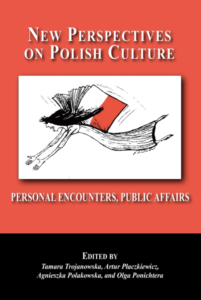
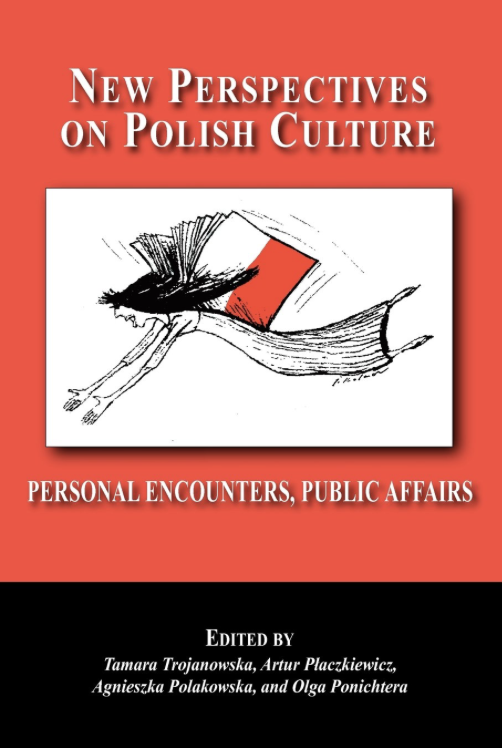
New Perspectives on Polish Culture: Personal Encounters, Public Affairs
edited by Tamara Trojanowska, Artur Płaczkiewicz, Agnieszka Polakowska, and Olga Ponichtera (New York: PIASA Books, 2012).
New Perspectives on Polish Culture: Personal Encounters, Public Affairs collects essays that examine the public-private dynamic as Polish culture—from the nineteenth century to the present day—interacts with the tensions, ambiguities, and idiosyncrasies of European modernity. The authors of these essays discuss Polish poetry, fiction, theatre, and literary and cultural theory. The collection links the nineteenth, twentieth, and twenty-first centuries in Polish culture: from a noteworthy interpretation of Adam Mickiewicz’s masterpiece Forefathers’ Eve through significant discussions of works written by Witold Gombrowicz, Czesław Miłosz, Zofia Nałkowska, Tadeusz Kantor, Sławomir Mrożek, and Tadeusz Różewicz to Paweł Huelle and many other authors active both in Poland itself and in the Polish diaspora. These essays examine, among other issues, ethical and aesthetic problems, the relation between the collective and the private, and the question of the personal and the historical. The authors also reflect on World War II, the Holocaust, Communism, Solidarity, and exile.
Advance Praise for New Perspectives on Polish Culture
“This volume takes a giant step towards filling a noticeable gap in the study of Polish culture. It is perhaps the first major English-language collection to cover a wide range of contemporary authors and critical approaches to culture, bringing North American Polonists into dialogue with the best literary critics working in Poland today. At the heart of New Perspectives lies a series of fundamental questions about the dichotomy of the public/private, the individual and collective life, as it is expressed in Polish literature. This topos is treated historically in terms of the legacy of nineteenth-century Romanticism and nationalism; metaphysically, as a key to the modernist struggle with selfhood and being; cathartically, describing contemporary Poland’s attempts to publicly narrate its traumatic past; and ultimately, transnationally, as part of a larger negotiation of identity to reconcile its diasporic elements with the national canon at home. Well-established scholars from both sides of the Atlantic write alongside exciting new voices in the field to bring figures under-recognized in English-language criticism into view—most notably Miron Białoszewski, the poets of bruLion, and a new generation of Polish playwrights and directors. Indeed, the most important contribution made by New Perspectives is that it will begin to redraw the outlines of the twentieth- and twenty-first-century Polish literary canon itself, particularly for an English-speaking audience.”
—Jessie Labov, Ohio State University
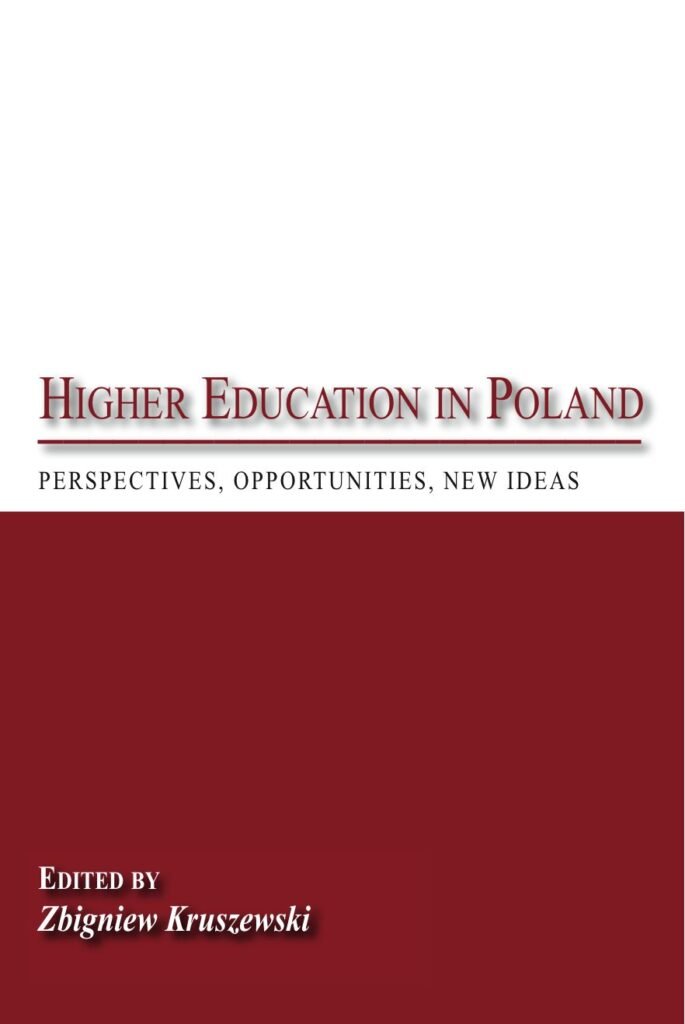
Higher Education in Poland: Perspectives, Opportunities, New Ideas
Edited by Zbigniew Kruszewski
Before 1990, the higher education system in Poland contained only state institutions with one exception, the Catholic University in Lublin (KUL). In 1990, new laws on higher educational institutions laid down rules for establishing Polish nonstate institutions of higher education, and their number has been steadily growing since then. Subsequently, significant changes in the laws regulating higher education in Poland were passed in 1997, 2003, 2005, and 2011. The result of all these legal changes, as well as Poland’s agreeing to implement the Bologna Process and become a member of the European Higher Education Area, is that the higher education system in Poland has become much larger, as well as more inclusive and diverse, not only in the types of students it admits but in the types of institutions it contains. The authors of the essays in Higher Education in Poland: Perspectives, Opportunities, New Ideas discuss the various changes and raise issues concerning Polish higher education both in state and private colleges. They present the results of their research into the complex issues surrounding Polish higher education. Among others the issues dealt with in this volume include the functioning of universities, the employing and promoting of scholars, the conducting of research, methods for financing research on teaching, methods of raising the level of education in order to satisfy European and world standards, the role of learned societies, and the self-governance of students.
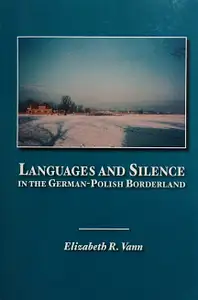
Languages and Silence
by Elizabeth R. Vann
Languages and Silence is an ethnography that focuses on a region of Silesia near Opole where the inhabitants speak three languages: Polish, German, and Silesian. The author spent several different extended periods of time living in a town that she calls Dobra, and she attempts to analyze the different ways that the inhabitants use the three languages and the situational, associational, political, and historical reasons they choose to speak whatever language they are speaking at any given moment.
Elizabeth R. Vann describes interpersonal situations in which a speaker uses specific words in one language or another for a particular purpose. Among the study’s conclusions are that Silesian is associated with social familiarity and playfulness, while Polish is an expository register that makes a relatively intense, unidirectional claim on addressees’ attention, and German is used as “a language of conflict.” Additional dimensions of contrast have to do with speakers’ “evaluations of cultural and temporal distance,” with Silesian indicating cultural closeness (identity as well as indigeneity or archaism), Polish greater cultural distance (and fanciness), and German a farther extreme of otherness.
The author also argues that the analysis of this linguistic complexity can tell us a lot both about how individuals construct their ethnic and national identities, and how that construction is interwoven with psychology, politics, and history.
Advance Praise for Languages and Silence in the German-Polish Borderland
“Languages and Silence contains important insights into the nature of national and ethnic affiliation, especially under conditions where state boundaries change—and how these dynamic relationships can be charted through language. Silesia is a fascinating case because of the intersection of three languages. The author’s characterization of the region as a kind of blank space between clearly bounded places forces us to rethink conventional understandings of nation-states and associated national identities divided by clear lines.” —Marysia Galbraith, University of Alabama
“Languages and Silence is a beautifully crafted text, which deals with politically, ideologically, and theoretically complex issues of identity in the borderlands where language and practices of language use both reflect and perform identities the negotiation of which in Silesia has never been a neutral choice. The text is ethnographically rich, theoretically solid, and a pleasure to read.” —Janina Fenigsen, Northern Arizona University
About the Author
Elizabeth R. Vann is a writer, researcher, and international educator. She holds a Ph.D. degree in linguistic anthropology from the University of Chicago and has taught students from over fifteen countries. In addition to her sojourns in Silesia chronicled in the book, she has lived in the United States, England, Germany, Gaza, and Egypt.
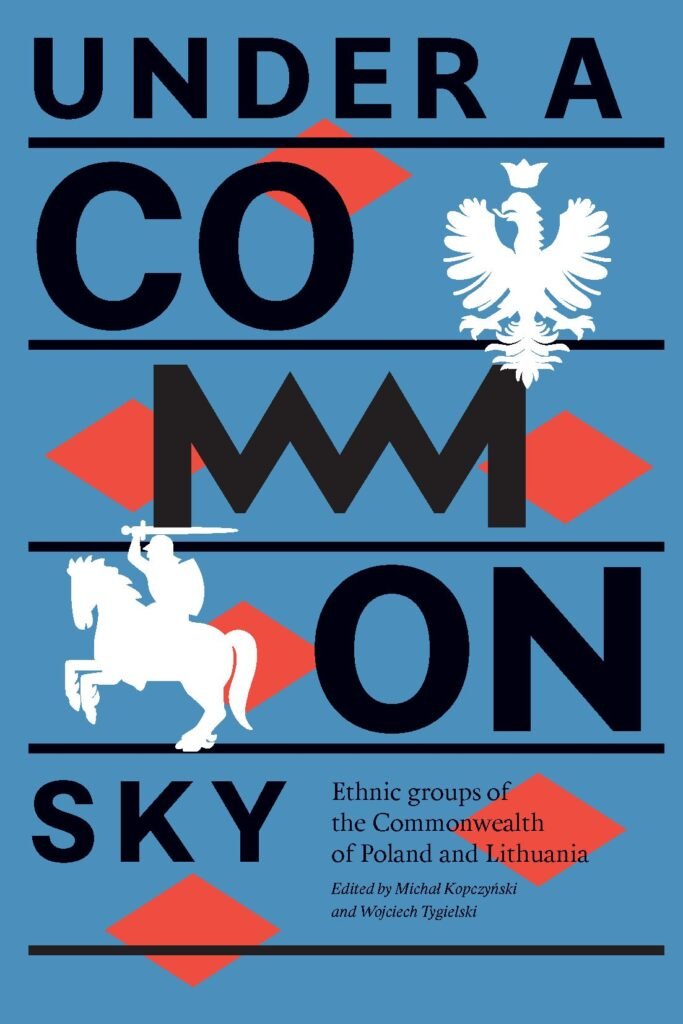
Under a Common Sky: Ethnic Groups of the Commonwealth of Poland and Lithuania
Edited by Michał Kopczyński and Wojciech Tygielski
Under a Common Sky: Ethnic Groups of the Commonwealth of Poland and Lithuania explores the diversity of the Polish-Lithuanian Commonwealth from the late Middle Ages to the nineteenth century, a multicultural experiment that lasted over four hundred years. The goal of the book is to show this diversity, to describe its individual components with an emphasis on their cultural richness, and thus to paint a portrait of the community that resulted from being long-term neighbors. The essays collected in this volume focus on the nations of historic Commonwealth, their numbers, geographical location, social structure, and impact on the political life and culture of the Commonwealth. The authors write not only about Poles, Lithuanians, and Ruthenians, but also about immigrants to the Commonwealth: Germans, Jews, Armenians, Tatars, Karaites, and Gypsies, as well as Italians, Scots, and Dutch Mennonites.
Copublished with the Polish History Museum, Warsaw
ISBN 978-83-65248-18-3
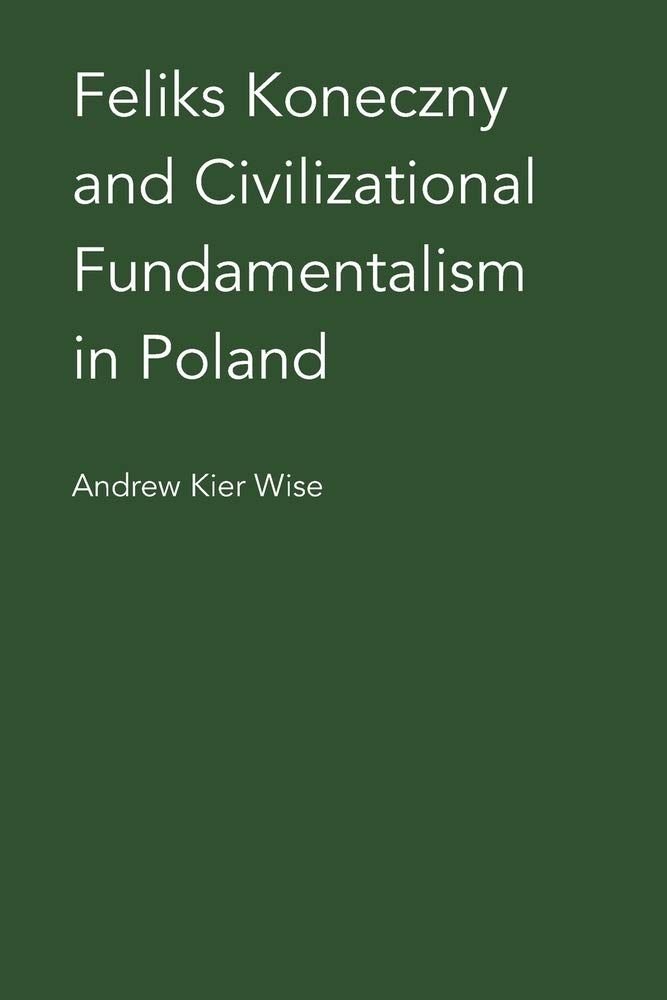
Feliks Koneczny and Civilizational Fundamentalism in Poland
by Andrew Kier Wise
In this first English-language monograph about the Polish historian Feliks Koneczny (1862–1949), Andrew Kier Wise explains Koneczny’s theories and the ongoing debate about their meaning and relevance for Poland in the twenty-first century. Koneczny believed in a “plurality of civilizations” rather than a universal path of historical development. Developed fully during the troubled interwar period, his “science of civilizations” prefigured the “clash of civilizations” theories of our own era. Koneczny was especially concerned with pressure from “the Orient” on Polish society by the so-called Byzantine, Turanian, and Jewish civilizations. He believed that Poland’s distinct cultural identity was grounded in Latin (Western) civilization and derived from the classical heritage of the Roman Republic and medieval Catholicism. Adherents to Koneczny’s worldview—which Wise defines as “Konecznian fundamentalism” or “civilizational fundamentalism”—embrace Koneczny’s “quincunx of existential values” as a way to understand the world. Koneczny’s theories and analytical framework thus provide a scholarly foundation for popular criticism of globalization, cosmopolitanism, immigration, feminism, the European Union, and other perceived threats to traditional Polish society.
Advance Praise for Feliks Koneczny and Civilizational Fundamentalism in Poland
“This is an extremely well-researched and intelligently argued account of the thought of the Polish intellectual historian Feliks Koneczny (1862–1949). There is clearly a need for a critical evaluation of his work, which has had a considerable influence on the ethno-nationalist right wing of Polish politics.”
—Antony Polonsky, Chief Historian, POLIN Museum of the History of Polish Jews, Warsaw
“Feliks Koneczny and Civilizational Fundamentalism in Poland is an interesting and insightful discussion of Koneczny’s significant contribution to right-wing thinking in contemporary Poland.”
—Robert Blobaum, PIASA President and Eberly Family Distinguished Professor of History, West Virginia University
About the Author
Andrew Kier Wise is Professor of History and Director of the Center for Polish Studies at Daemen College in Amherst, New York, where he teaches courses in European and World History. He has been a Visiting Professor at the Institute of History, Jagiellonian University (2018) and the American Studies Center, University of Warsaw (2019). His publications include Aleksander Lednicki: A Pole among Russians, a Russian among Poles: Polish-Russian Reconciliation in the Revolution of 1905 (East European Monographs, 2003).
ISBN: 978-0-940962-75-0
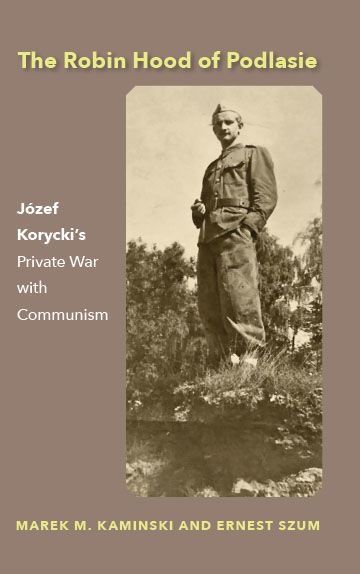
The Robin Hood of Podlasie: Józef Korycki’s Private War with Communism
by Marek M. Kaminski
In 1982, during Martial Law, the communist authorities named as Public Enemy No. 1 not Lech Wałęsa or any other Solidarity activist but rather Józef Korycki, a Robin Hood–like figure who was beloved by the locals in his home region of Podlasie. They compared him to Janosik, a Slovak bandit who robbed from the rich to give to the poor. Marek Kaminski and Ernest Szum describe Korycki’s adventures, from his desertion from mandatory military service (when he kidnapped a Russian military officer!), to his days of robbing village mayors and distributing the proceeds among the local farmers, to his dramatic capture and imprisonment in Rakowiecka Prison, where he was admired by his fellow prisoners and eventually died.
Korycki told Kaminski his life story when the two were in the same prison hospital ward in Rakowiecka. Korycki’s life partner, Krystyna Oksiejuk, provided Kaminski and Szum with detailed testimony on Korycki’s life in hiding during the years of 1979 to 1982. In addition to the narrative of Korycki’s life, Kaminski and Szum also discuss the notions of ideological and social banditry and how Korycki fits into these frameworks, as well as the political history of communist Poland and the tradition of rebelling against foreign occupiers in the Podlasie region of Poland.
Advance Praise for The Robin Hood of Podlasie
“Józef Korycki was clearly a very controversial figure and was criticized by many—by various officers of the Polish authorities as well as members of the anti-Communist opposition (that Korycki claimed to be part of). Korycki was imprisoned for his participation in criminal actions—robbing and stealing—but he claimed that he was an anti-Communist and hence his activities should be seen through the prism of his desire to weaken socialist Poland and its authorities. The authors of The Robin Hood of Podlasie invite a discussion of what it means to be a political prisoner, what are the potential ethical consequences of being an ‘ideological bandit,’ as they call Korycki, and how we should evaluate criminal actions if they are claimed to be done for political reasons.”
Anna Muller, author of If the Walls Could Speak: Inside a Women’s Prison in Communist Poland
“Józef Korycki has a mythical status in contemporary Polish history. Depending on one’s perspective, he was an enemy of the state, a unique individualist, or a modern-day Robin Hood. Kaminski and Szum’s detailed study separates the myth from reality. It is an engaging, detailed study of Korycki’s life, and even more important, an insightful commentary on life in communist Poland.”
—Russell J. Dalton, University of California, Irvine
About the Authors
Marek M. Kaminski is an associate professor of political science at the University of California, Irvine. He specializes in political systems and economies in transition, formal models of voting, the political consequences of electoral laws, Central European politics, allocation and social choice, and the subculture of total institutions. He is the author of Games Prisoners Play: The Tragicomic Worlds of Polish Prison (2004), as well as several books published in Poland and many articles published in English and Polish.
Ernest Szum is a historian who writes about historical and contemporary social phenomena occurring in Poland and in the rest of the world. In 2014, he published a book that is a historical and sociological study of the Battle of Siemiatycze in the January Uprising. He is also the author of many scholarly articles, among which are three about Józef Korycki published in Polish history journals.
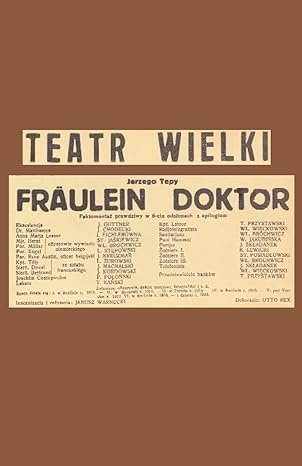
Fräulein Doktor
by Jerzy W. Tepa
Fräulein Doktor is a bilingual Polish/English edition of a play that originally premiered in 1933 at the Teatr Wielki in Lwów. It dramatizes the exploits of Anna Marie Lesser, a beautiful and accomplished German spy during the First World War, who was based on an actual historical figure. The original production, called “a theatrical sensation,” broke all previous records for continuous theatrical performances. Within months of its Polish premiere, productions of Fräulein Doktor were also mounted in Bucharest, Paris, Spain, Canada, and the United States. The play was translated into many languages, including English, French, Spanish, and even Yiddish. It continued to be performed on the Polish stage after World War II, and was adapted for Teatr Wspólczesny TV in 1975.
The play is accompanied by a foreword by Czesław Halski, the distinguish Polish poet, author, radio announcer, music critic, composer, and biographer of Paderewski, as well as an introduction by Barbara Tepa Lupack, the playwright’s daughter, who also translated the play into English.
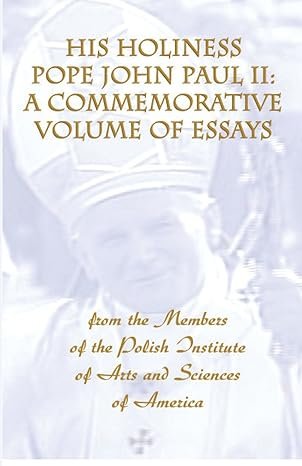
His Holiness Pope John Paul II: A Commemorative Volume of Essays from the Members of the Polish Institute of Arts and Sciences of America
Edited by Charles S. Kraszewski
His Holiness Pope John Paul II gathers together essays by members of the Polish Institute of Arts and Sciences of America celebrating the rich and varied legacy of this great pope—now a canonized saint—from his philosophical and social thought to his poetry and his significance in world history. John Paul II held a special place in the hearts of those who were fortunate enough to know him, including the former presidents of PIASA Piotr Wandycz and Thaddeus Gromada and the director, playwright, and author Kazimierz Braun. Other members of PIASA, including the distinguished scholar and translator Harold B. Segel; the poet, critic, and translator Bolesław Taborski; and Fr. Janusz A. Ihnatowicz, himself a noted contemporary Polish poet and translator, write about the pope’s activity as a playwright and poet. Several articles were commissioned especially for this volume, including one by Archbishop Józef Życiński, the chancellor of the Catholic University of Lublin. The volume also includes an interview with the famed director Krzysztof Zanussi about his film of Our God’s Brother, a play by Pope John II about the Polish saint Brother Albert and other articles that touch on the holy father’s global reach, moral authority, and advocacy for human rights.
Charles S. Kraszewski is a Polish-American professor and translator from Polish to English and English to Polish. He teaches in the English Department of King’s College in Wilkes-Barre, Pennsylvania.
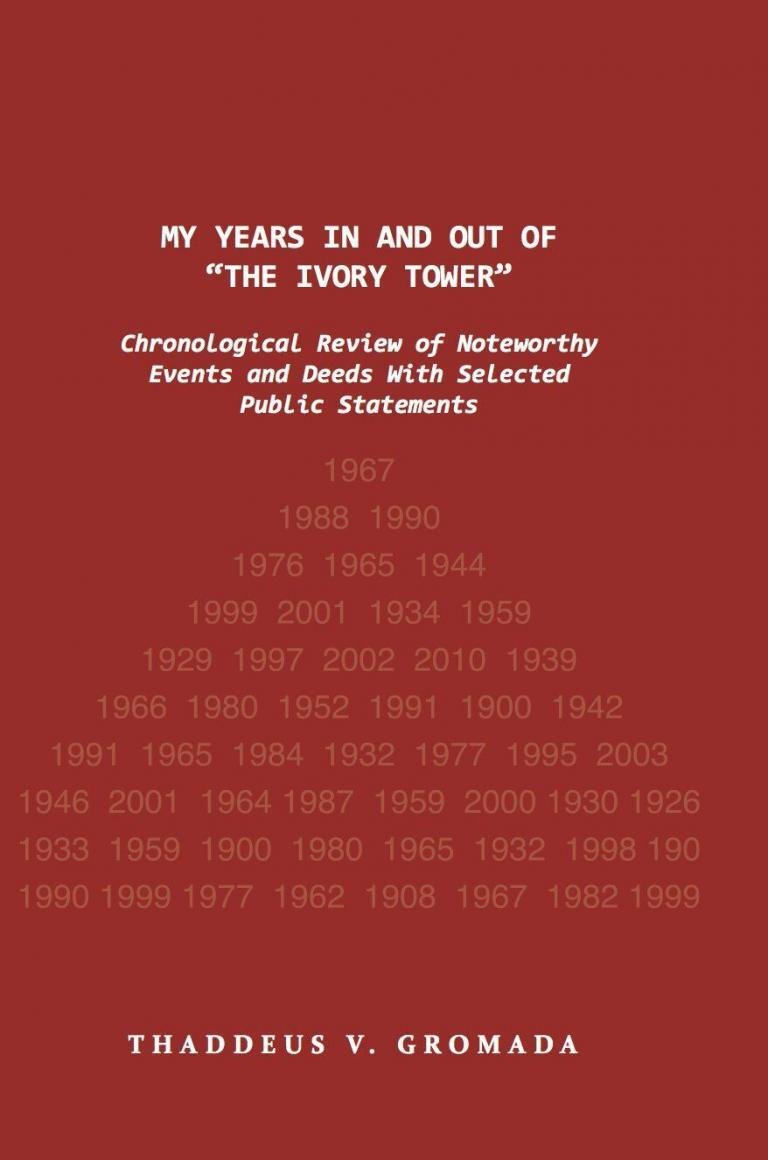
My Years In and Out of the “Ivory Tower”
by Dr. Thaddeus V. Gromada
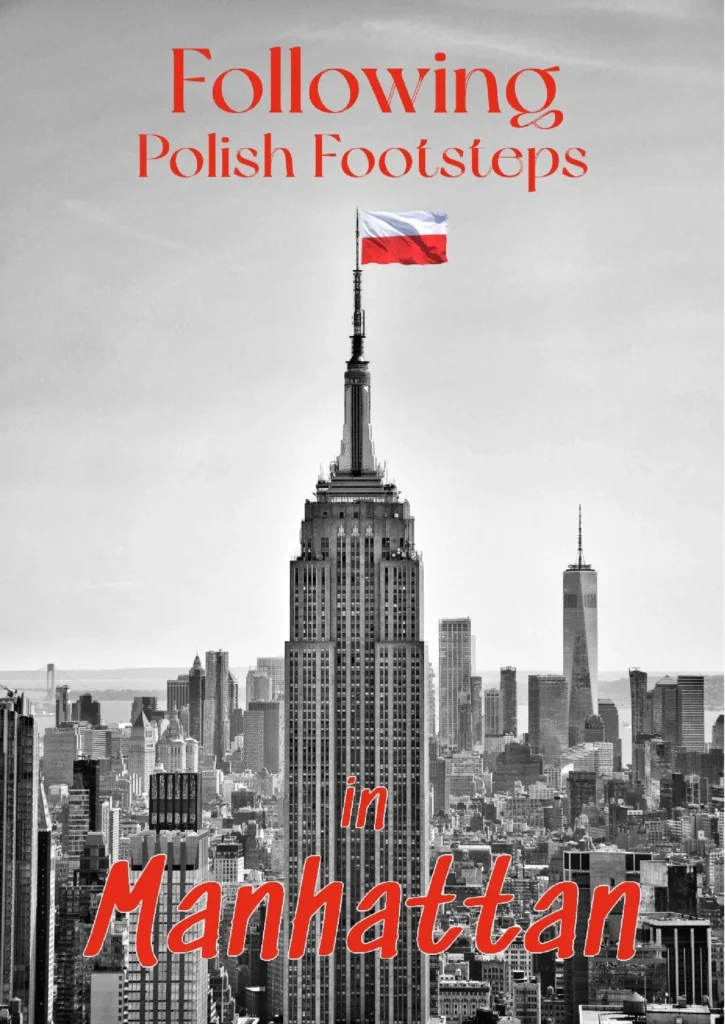
Following Polish Footsteps in Manhattan
PIASA Books
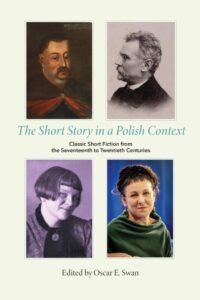
The Short Story in a Polish Context:Classic Short Fiction from the Seventeenth to Twentieth Centuries
Edited and with Commentary by Oscar E. Swan
Essential Reading for Polish Studies
An anthology that shows how the short-fiction genre evolved in Poland, The Short Story in a Polish Context contains selections belonging to the Polish short-story canon throughout the ages. A variety of Poland’s greatest and best-known authors and interesting themes have been chosen. Several of the stories appear here in English for the first time in Oscar Swan’s masterful translations; others have been translated by other well-known literary translators of Polish. Prof. Swan’s commentaries on the stories give the reader historical context as well as providing insight into linguistic and cultural aspects that might otherwise elude the non-Polish-speaking reader. Appropriate for use as a text in a Polish literature-in-translation course, the book can also serve as a supplementary text for courses on Central European culture or simply as an introduction to Polish culture for the general reader.
About the Editor
Oscar E. Swan is professor of Slavic languages and literature at the University of Pittsburgh, where he has been teaching since 1974. He specializes in Polish language, literature, and culture as well as Polish cinema. He is the author of many textbooks and reference books for Polish-language learners, several translations from Polish, and scholarly monographs and articles about Slavic languages and literatures.
The Short Story in a Polish Context, edited and with Commentary by Oscar E. Swan. Published by PIASA Books, an imprint of the Polish Institute of Arts and Sciences of America.
ISBN 978-0-940962-17-0