“Polish Bison have not yet perished, so long as there’s a few still living” by Nathan Wood
A few years ago, while skimming through a popular Polish newsmagazine from 1933, I happened upon a story entitled “The Bison are Dying Out!” The first sentence of the article observed that “The European bison (Żubr), the royal beast that once filled Polish forests” was, “despite the care given it by the Polish government, practically going extinct.” The remainder of the article described the hardships of a small herd of bison on the Pszczyna estate in Silesia, the only semi-wild herd of bison in Poland at the time, which had numbered seventy-four animals just fifteen years before but had recently dropped to nine.
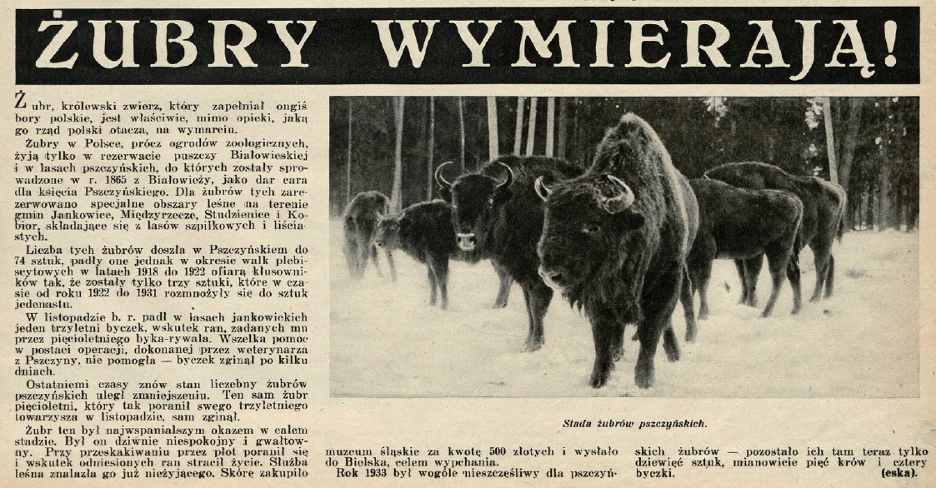
That opening line caught my attention for several reasons. First, I recalled learning elsewhere that the biggest threat to the European bison had occurred in conjunction with the First World War, which led to the extinction of the wild bison of Białowieża Primeval Forest. It was revealing to see that in 1933 fears of species extinction were still pronounced. Second, the language of this sentence intrigued me: if the bison was a “royal animal” from Poland’s past, a link to a time when the Polish-Lithuanian Republic was governed by kings who had hunted the large beasts, did patriotic Polish naturalists think of its restoration from near-extinction in much the same way they thought of the “restoration” of a Polish state after the war?
I started to think about how the First World War had brought about the extinction of the three empires that had governed the Polish-speaking lands, and about how, for Polish patriots, the creation of a new Polish state in the years that followed was seen as a resurrection of sorts, the restoration of a state that had been killed off in 1795. The outcome of the war, I thought, was hardly so positive for the bison—the last of the Białowieża herd was killed before the snow melted in 1919—but, perhaps for the people who were trying to save the species, the animals’ restoration could be seen in a similar light. To play with another opening line, this one from the Polish national anthem, could they have thought: “Jeszcze żubry nie zginęły, póki kilka żyje!” ([Polish] Bison have not yet perished, so long as there’s a few still living!)?
I started to read scholarly articles about the near-extinction and restoration of European bison, along with articles from Polish hunting magazines about bison restoration in the 1920s and 30s, which I could access online. I presented my early findings at PIASA’s World Congress in Białystok in 2022, but my effort to go to Białowieża National Park and meet with an expert there was foiled by the refugee crisis that became the subject of Agnieszka Holland’s haunting film Green Border. The town of Białowieża and the national park were cordoned off, and I was not allowed entry.
In 2024, I sandwiched my participation in PIASA’s World Congress in Warsaw into time in the Polish Academy of Sciences/Polish Academy of Arts and Sciences (PAN i PAU)* archives in Krakow, where I found a trove of documents connected to bison restoration in the papers of the State Council for the Protection of Nature (Państwowa Rada Ochrony Przyrody). I also found fascinating materials in the state archives in Białystok. And I finally got to go to Białowieża National Park, take a tour of the restricted area, and see wild bison as I wandered the perimeter of the park.
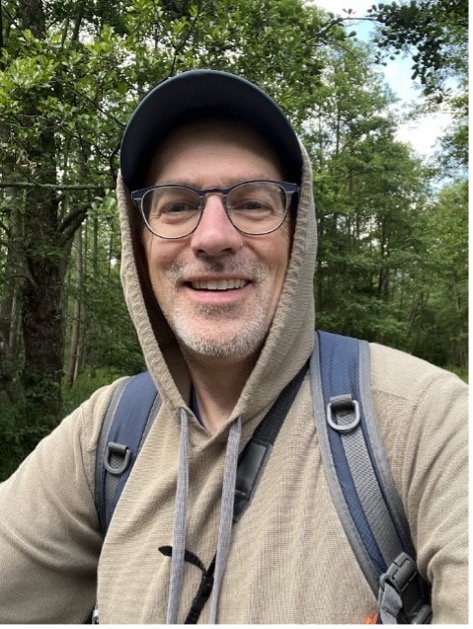
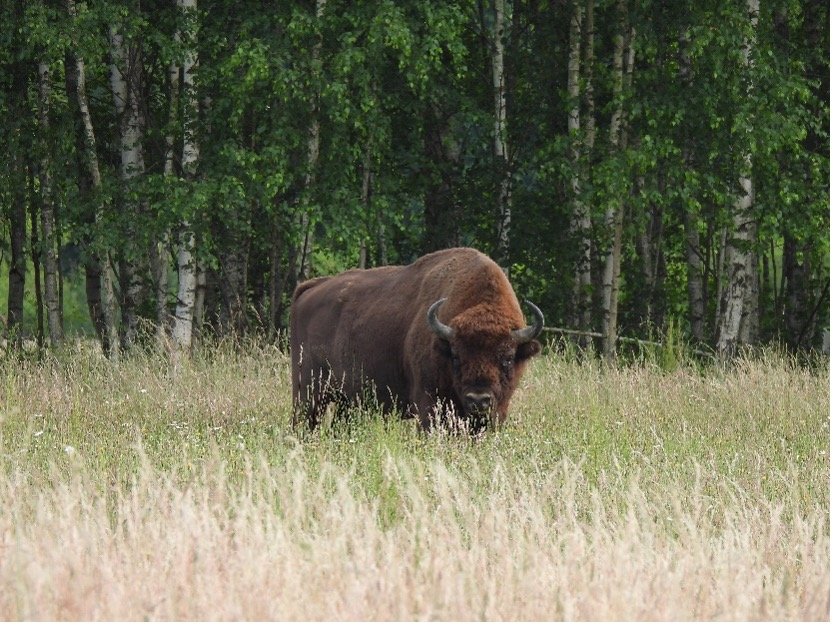
Self-portrait and a bison bull I photographed in Białowieża in 2024
The result of my research, strengthened by feedback from specialists and peer reviewers, appeared as “Returning ‘Our Royal Animal’ to Its ‘Fatherland’: The Near-extinction and Restoration of Bison in Poland after World War I” in the spring 2026 issue of Slavic Review. In it, I tell the story of near-extinction of European bison as a species and then focus on Polish efforts to restore the animal, which many of my sources called “our royal animal,” to its “fatherland” in Białowieża. I examine the desire of patriotic naturalists and hunters to restore a “pure” version of the Lowland European bison to a version of Białowieża that preserved its wildness, while taming and civilizing the people who lived there, so that they would not again poach the emblematic beast. I discuss an embarrassing episode from 1931, in which Prince Hans Hochberg permitted Margrave Alfred Wielopolski to shoot two infertile bison from the herd on his estate in Pszczyna and reflect on how, for most of my sources, bison were no longer the preserve of kings or hunters, but that they were still perceived as “ours,” to be managed for the benefit of two superseding collectives: the nation and the species.
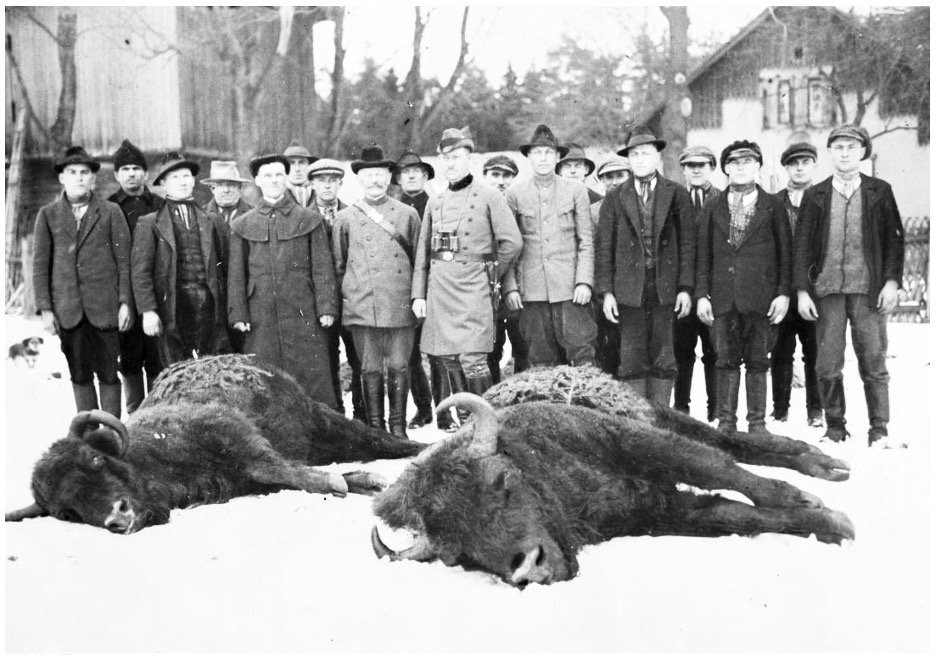
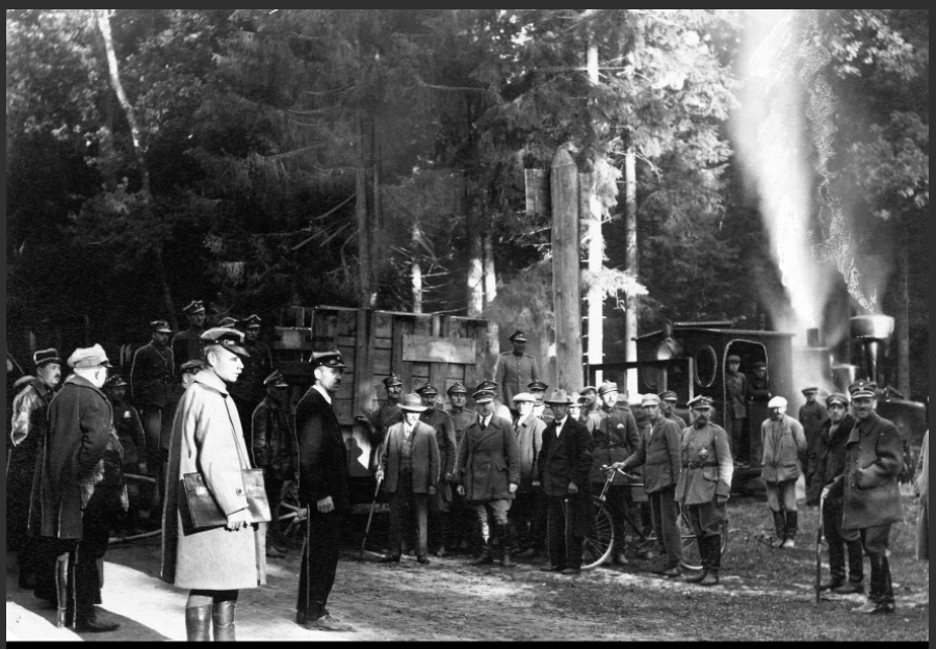
Bison returned to enclosures in Białowieża in 1929, but it was not until 1952 that the first pair was released into the forest. In the People’s Republic of Poland, bison could remain a symbol of Polish pride, but they were no longer the preserve of gentlemen hunters. Over time, with human interventions largely limited to medical examinations and putting out feed during harsh winters, the Białowieża bison could choose their diet and mates, crossing freely between national parks in Poland and the Byelorussian Soviet Socialist Republic. Now there are more than 1,000 European Lowland Bison in Białowieża and more than 10,000 in the wild or in captivity across Europe—descendants of just seven animals from among the sixty or so alive in captivity in the mid-1920s. The erection of a border wall in 2022–23 to keep human refugees from entering the Schengen Zone via Belarus is keeping most of the Białowieża herd in Poland. Politics, conflict, and human perceptions of possession continue to shape the bison’s destiny.
*Prominent émigré scholars, including Bronisław Malinowski and Oskar Halecki, founded PIASA in 1942, to keep PAU from going extinct after being outlawed by the Germans. Knowing this made working in the PAN i PAU archives particularly meaningful for me as a board member of PIASA.
Nathan Wood is a PIASA Board Member and Associate Professor of History and Director of Undergraduate Studies at the University of Kansas. He is the author of Becoming Metropolitan: Urban Selfhood and the Making of Modern Cracow and studies Polish urban history, technology, and mobility.