Dark Political Thrillers with Małgorzata Pośpiech by Anna Muller
I recently came across the YouTube channel Dark Political Thrillers by Małgorzata Pospiech while searching for materials on the Cold War and postwar Europe to share with my students. It immediately caught my attention because my first book, If the Walls Could Speak, explored women’s prison cells in post-1945 Poland and the experiences of female political prisoners under the early communist regime.
After watching several episodes, I reached out to Małgorzata to learn more about the project.
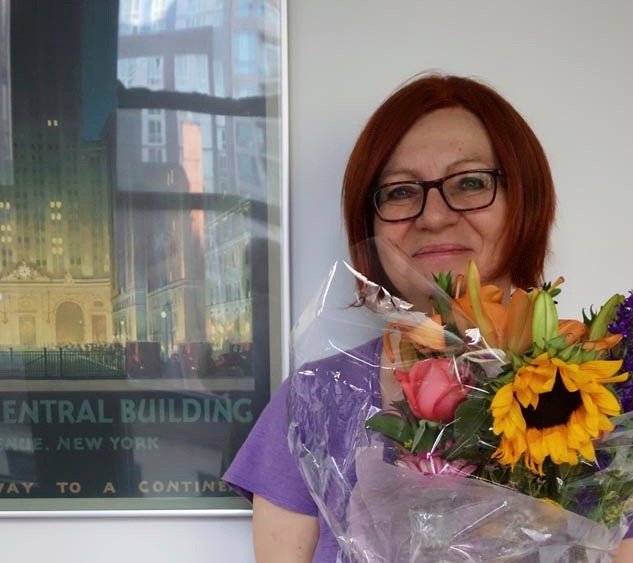
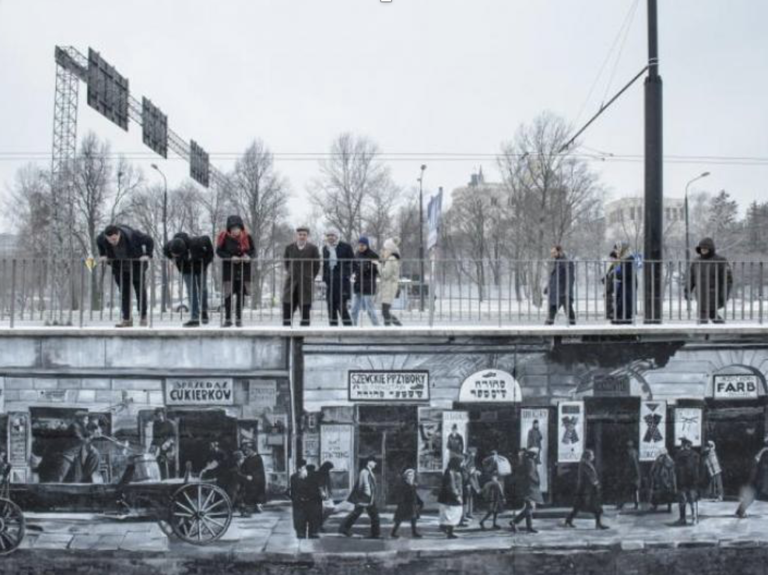
The channel grew out of her literary series Small Town Saga (Miasteczko), inspired by the history of Kępno, the small town in western Poland where she grew up. Before the Second World War, Kępno was home to Poles, Germans, and Jews. Like many towns in postwar Poland, it was transformed by war, population displacement, and the imposition of communist rule. Those historical changes form the backdrop to the novels as well as many of the channel’s episodes. In October 2026, the “Dark Political Thrillers” channel currently has over 9,000 views and 105 episodes.
What interested me most was the way the project moves naturally between literature and history. It combines conversations, archival documents, photographs, readings, and short historical videos without treating literature and historical research as separate worlds.
The project is also deeply personal. Pospiech’s father was arrested in 1948 for his involvement in the anti-communist underground, sentenced to ten years in prison, and spent several years in Wronki before being released in 1953. His story became one of the starting points for Small Town Saga, but also for a broader effort to recover the experiences of people whose lives were shaped by political repression.
That effort is grounded in extensive research. While writing the novels, Pospiech examined thousands of pages of communist security archives, consulted historians, read scholarly studies, and spoke with former political prisoners, witnesses, and their families. The result is fiction built upon a substantial historical foundation.
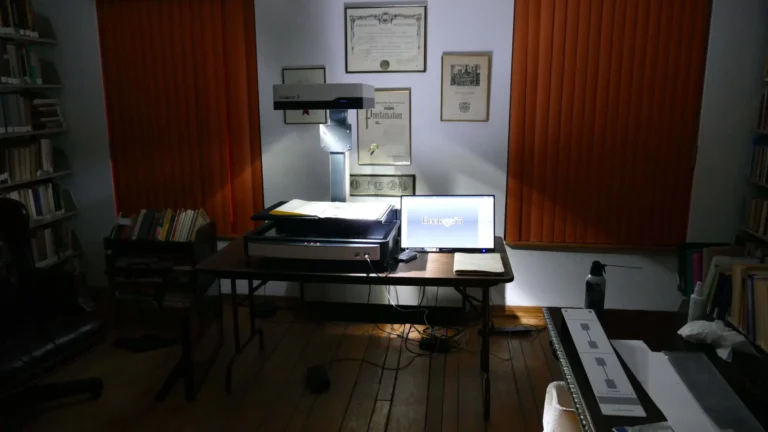
Her interest in documenting forgotten lives began long before Small Town Saga. Before moving to the United States, she worked in the Manuscripts Department of the Ossolineum Library in Wrocław, where she encountered memoirs written by people deported to Siberia and Kazakhstan. Later, she created the Siberian Archive, produced the documentary film Pokolenie, and recorded interviews with Siberian deportees for Polish Army Veterans Association YouTube channel in both Polish and English. The Polish-language channel has attracted almost 150,000 views, demonstrating a continuing public interest in these personal histories.
When I asked why she chose YouTube, she pointed to its accessibility. Short videos, she explained, make it possible to introduce literary and historical subjects to people who might never pick up a scholarly book or watch an hour-long lecture.
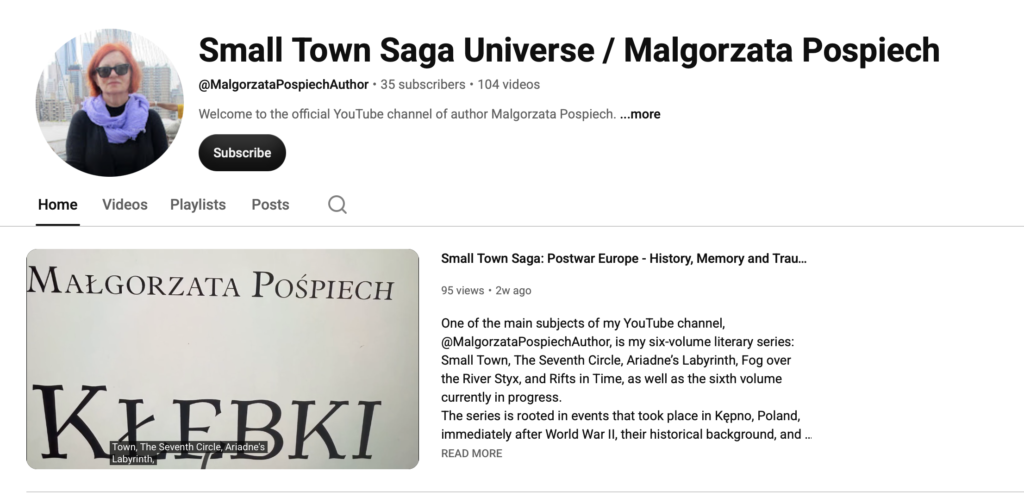
Małgorzata was quick to emphasize that the channel is a collaborative effort. Writer and critic Jarosław Anders has reviewed the Small Town Saga series in the literary journal Odra and appears in several of the conversations. Translator Longia Miłosz Miller and illustrator William Miller, who are preparing the English edition of Small Town Saga, have also helped shape the bilingual project. As Pospiech put it, their generosity made it possible to create something she could not have accomplished alone.
The channel began with conversations about Small Town Saga, but it has gradually expanded into something broader. Today it includes more than one hundred episodes based on nearly two decades of archival research, with new ones still in preparation. It strikes me as an engaging example of how writers and historians can use digital platforms not simply to promote their work, but to bring historical research, literature, and personal testimony into a wider public conversation. At a time when questions about democracy, memory, and authoritarianism have again become part of public debate, projects like this remind us that understanding the past is essential to understanding the present.
Malgorzata Pospiech, Ph.D., is a Polish-born writer, filmmaker, journalist, and photographer based in New York City. She earned her doctorate from the University of Wrocław, where she studied literature, film, and art history. She gained national recognition as the director and writer of a feature-length documentary about Arthur Penn. She has made several documentaries for Polish television, including A Generation, which chronicles the plight of Polish people deported to Siberia by the Soviets, as well as short documentaries about Polish artists. She has also recorded more than 70 interviews with World War II veterans and survivors. These interviews are housed in the archives of the Polish Army Veterans’ Association in Manhattan and linked to the official website for Peter Weir’s film The Way Back. Her other work includes the experimental film Heat and several video installations presented in New York City galleries. For the past 30 years, she has contributed to Odra, a leading Polish literary magazine. She has published hundreds of articles, essays, interviews, and reviews in both popular and academic publications. She is also a published translator. Her books include Arthur Penn in Conversations 1992–1995 (2011); the novels A Small Town (2014) and The Seventh Circle (2016); the poetry collection A Notebook (2017); Ariadne’s Labyrinth (2017); Fog Over the River Styx (2019); and Rifts in Time (2023). A Small Town, Ariadne’s Labyrinth, and Fog Over the River Styx qualified for the Central European Literary Award in 2015, 2018, and 2020, respectively. Rifts in Time also qualified for the award.